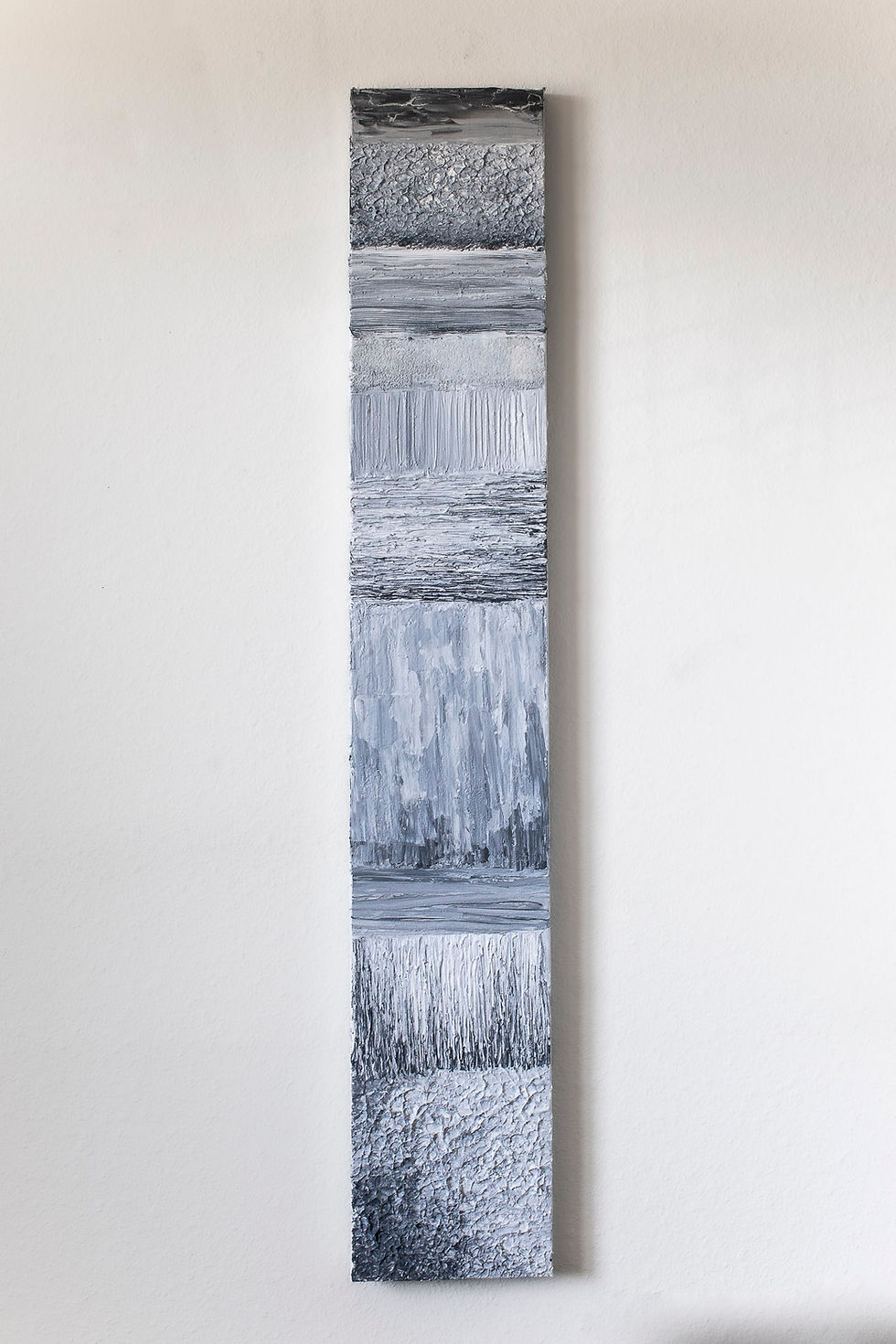
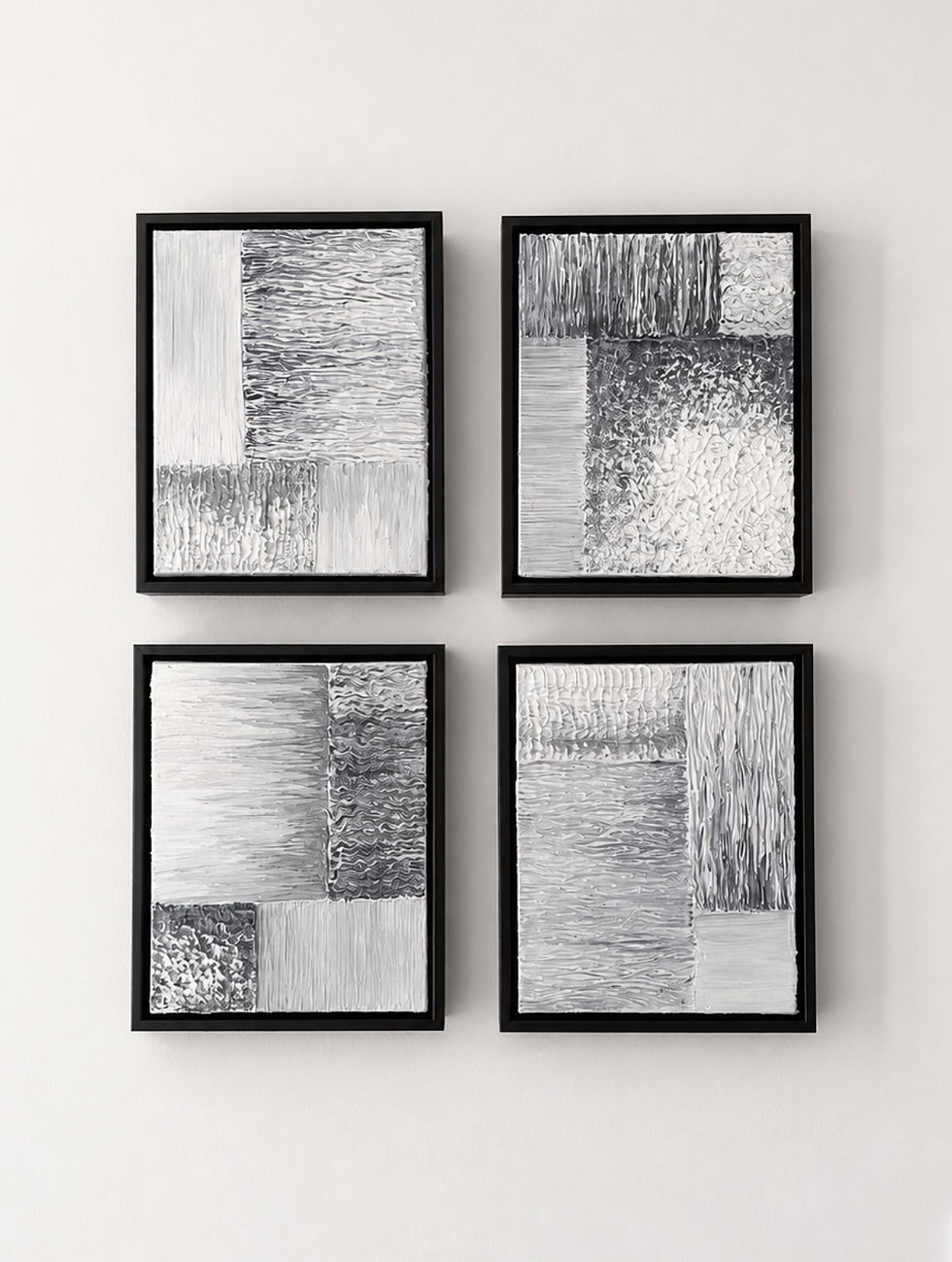
THE SILENT DUEL (2026)
The Silent Duel explores the inner battle between impulse and discipline through the convergence of early Christian monastic belief, the Bushidō code of the samurai, and the Taoist principle of yin and yang.
The Seven Deadly Sins depicted in this work originate from the teachings of Evagrius Ponticus, a fourth-century monk living in Egypt during the rise of Christian monasticism. Around 375 AD, Evagrius identified the “eight evil thoughts” as inner mental states requiring vigilance and self-mastery: ideas that later evolved into the Seven Deadly Sins: lust, gluttony, greed, sloth, wrath, envy, and pride.
These forces appear on the yang side of fire, where seven ninjas embody excess, fear, and ego through unstable postures, defensive stances, and outward-seeking energy. Opposing them, the yin side of ice presents their remedies: connection, temperance, generosity, purpose, agency, gratitude, and humility, expressed through grounded presence, restraint, and intentional movement.
At the center lies the yin & yang, a foundational Taoist symbol representing opposite yet complementary forces that interact to create dynamic balance in the universe in constant transformation."Yin" is retractive, passive, contractive, and receptive in nature in a contrasting relationship to "yang" that is repelling, active, expansive, and repulsive in principle. Yin and yang do not exist in opposition but in balance, each containing the seed of the other.
The remedies align with the core virtues of Bushidō, where discipline refines desire and character is forged through ethical action. Rather than portraying good versus evil, The Silent Duel presents a moment of confrontation within the self, where balance is not achieved by erasing darkness, but by integrating it.